




SteadyStep™ Foot Drop AFO Brace
SteadyStep™ Foot Drop AFO Brace
reduces toe dragging & improves walking stability
reduces tripping risk
non-surgical, long-term everyday solution
BUNDLE & SAVE
Couldn't load pickup availability
⟳ 30-day money-back guarantee

SteadyStep™ Foot Drop AFO Brace
Who Is SteadyStep™ For?
Who Is SteadyStep™ For?
SteadyStep™ is created for men and women who experience foot drop or toe dragging while walking — including those who:
- Frequently catch their toes or stumble.
- Struggle to lift the front of the foot while stepping.
- Feel off-balance or unsteady during movement.
- Have foot drop related to nerve issues, injury, stroke, or neurological conditions.
- Notice mild foot-lift weakness that worsens with fatigue.
- Prefer a non-surgical, drug-free option for daily walking support.
Whether symptoms are mild or more advanced, SteadyStep™ is designed to promote safer, steadier, and more confident movement throughout the day.
How to Use SteadyStep™
How to Use SteadyStep™
- Unfasten and loosen all straps before putting it on.
- Slide your foot into the brace, making sure the front of your foot rests comfortably in the support area.
- Fasten the foot strap first, then secure the ankle strap until snug and supportive (not too tight).
- Put on your shoe — footwear with a little extra room tends to fit best.
- Stand up and take a few steps, adjusting the straps if needed for comfort and stability.
- Start with short wear periods and gradually increase usage as you feel comfortable.
Shipping & Delivery
Shipping & Delivery
Free worldwide shipping. Tracking is sent once your order ships. Most orders arrive within 5–14 days, depending on location.


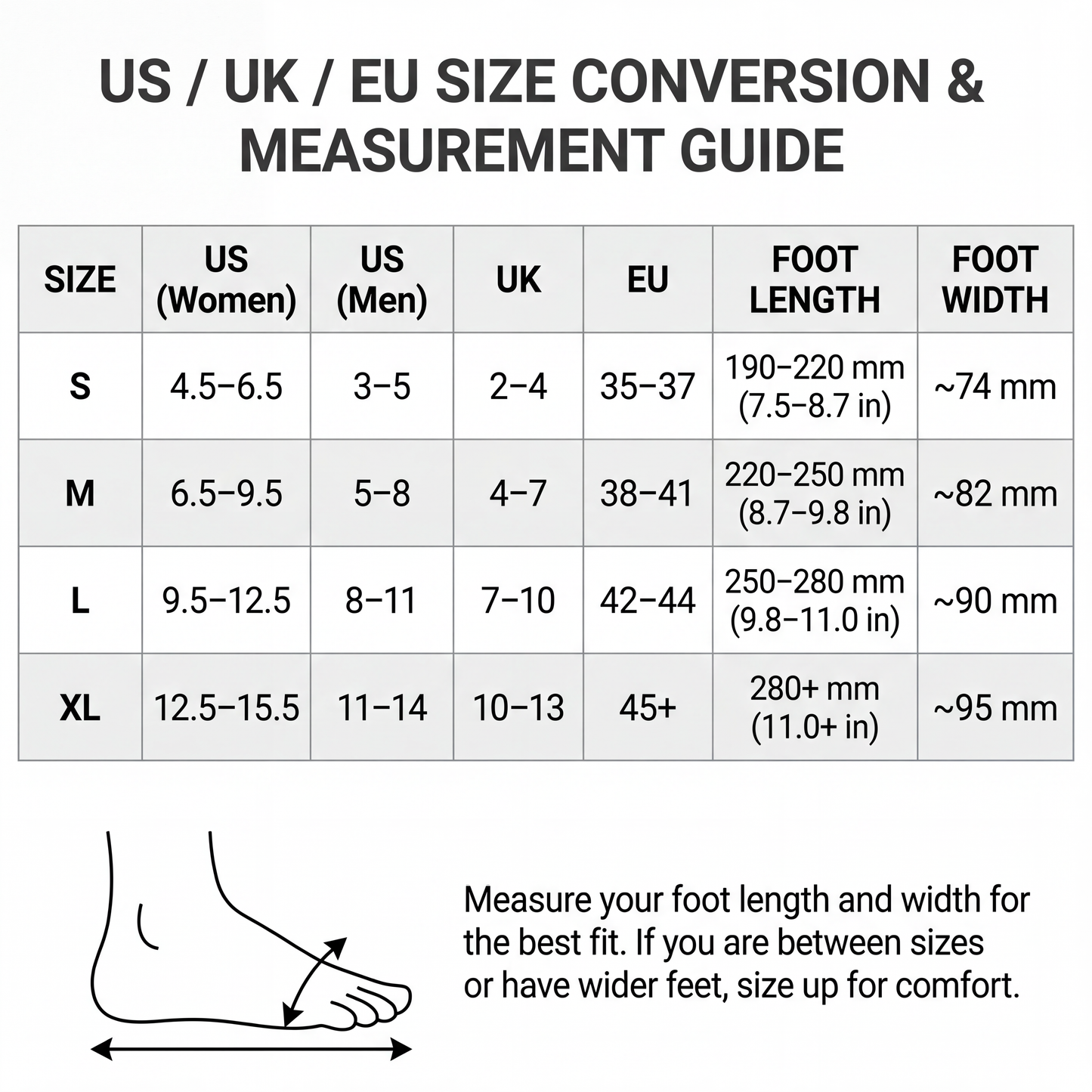
Sizing Chart
| Size | U.S (Men) | U.S (Women) | U.K | EU | Foot Length | Foot Width |
|---|---|---|---|---|---|---|
| S | 3-5 | 4.5-6.5 | 2-4 | 35-37 | 190-220 mm (7.5-8.7 in) | ~74 mm |
|
M |
5-8 | 6.5-9.5 | 4-7 | 38-41 | 220-250 mm (8.7-9.8 in) |
~82 mm |
| L | 8-11 | 9.5-12.5 | 7-10 | 42-44 | 250-280 mm (9.8-11.0 in) |
~90 mm |
| XL | 11-14 | 12.5-15.5 | 10-13 | 45+ | 280+ mm (11.0+ in) | ~95 mm |
Walk With Confidence Again
If your toes catch the ground while walking, it’s not just clumsiness — it’s often a signal issue between your brain and the muscles that lift your foot.
Lifting your foot requires a clear nerve signal to the front of your lower leg. When that signal weakens or gets disrupted, the foot doesn’t rise properly — leading to dragging, instability, and a higher risk of tripping.
This can happen due to nerve compression, back problems, neurological conditions, or injury recovery.
SteadyStep™ supports natural foot lift during walking. By guiding proper foot positioning at the right moment in your stride, it promotes smoother steps, better control, and more confident movement.
No dragging. No hesitation. Just steady, natural motion.
Restore the Natural Lift of Your Step
Every step you take is an opportunity to re-educate your movement.
With consistent use, SteadyStep™ helps guide your foot through a healthier lifting pattern, encouraging the correct muscles in the front of the lower leg to engage at the right time. Instead of compensating or dragging, your stride begins to follow a more natural rhythm.
As this pattern is repeated, your nervous system starts reinforcing the connection responsible for raising the foot. Over time, that repetition strengthens coordination between your brain and the muscles that control dorsiflexion.
The result? A smoother, more automatic lift — even during moments when you’re not wearing the device.

Minimize the Risk of Tripping With Every Step
When the front of the foot doesn’t lift high enough, even small obstacles — like stair edges or uneven pavement — can become dangerous.
SteadyStep™ supports a more controlled upward motion during walking, helping your toes stay clear of the ground as you move. By promoting smoother foot clearance, it reduces the chances of catching the surface beneath you.
The result is steadier footing, improved balance, and greater confidence navigating stairs, sidewalks, and uneven terrain — without the constant fear of stumbling.

Trusted by Experts
Healthcare professionals who focus on lower-limb function often suggest SteadyStep™ for individuals experiencing foot drop. By assisting proper foot elevation during walking, it helps promote smoother stride patterns and reduces unnecessary strain caused by toe dragging.
Rather than relying on invasive procedures or ongoing treatments, this supportive brace works with your body’s natural mechanics. Its straightforward design encourages more stable movement, offering a practical, everyday solution for maintaining safer, more confident mobility over time.
Hear from our happy customers

I have zero complaints, and it allows me walk about with my cane much easier than without and without the pain (my drop is so bad walking without hurts my toes as I'm pulling the skin taught at the nails, its BAD).
If I could give 6 stars, I seriously would.
Robert T.

I've had foot-drop since 1991, which continues to get worse with continued lumbar spine stenosis. I tried this after multiple falls, and it's helped immensely.
Michael R.

Drop foot due to accident. Brace allows me to walk normally and is comfortable inside shoe.
Sarah M.
I have zero complaints, and it allows me walk about with my cane much easier than without and without the pain (my drop is so bad walking without hurts my toes as I'm pulling the skin taught at the nails, its BAD).
If I could give 6 stars, I seriously would.
Robert T.
I've had foot-drop since 1991, which continues to get worse with continued lumbar spine stenosis. I tried this after multiple falls, and it's helped immensely.
Michael R.
Drop foot due to accident. Brace allows me to walk normally and is comfortable inside shoe.
Sarah M.
Based on a Survey of 700 Participants
our research revealed the following:
90%
experienced better balance and stability, particularly during daily walking and extended time spent on their feet.
87%
noticed reduced foot dragging and smoother movement within the first 1–2 weeks of use.
84%
felt increased comfort and confidence while walking, along with fewer stumbles and compensatory movements.
Results are based on feedback from over 650 satisfied customers.

frequently asked questions

How quickly will I notice a difference after using SteadyStep™?

How quickly will I notice a difference after using SteadyStep™?
Many customers feel a difference the first time they walk in it – especially less toe dragging and a steadier step. Most users report the biggest improvement after consistent daily use for 1–2 weeks, as walking becomes smoother and more natural.
Will SteadyStep™ help if my foot drop is from a stroke, MS, sciatica, or nerve compression?
Will SteadyStep™ help if my foot drop is from a stroke, MS, sciatica, or nerve compression?
SteadyStep™ is designed to support foot lift during walking, which can help reduce dragging and improve stability regardless of the underlying cause. If your foot drop is related to a medical condition (stroke, MS, nerve compression, etc.), results can vary – SteadyStep™ helps with the walking mechanics, but it doesn’t treat the condition itself.
Is it comfortable to wear? Can I still walk normally?
Is it comfortable to wear? Can I still walk normally?
Yes. SteadyStep™ is built for everyday walking and is fully adjustable. Once fitted correctly, you can walk normally – just with better foot lift and less dragging. A slightly roomier shoe often feels best at first.
Is SteadyStep™ just masking the problem, or does it help long-term?
Is SteadyStep™ just masking the problem, or does it help long-term?
SteadyStep™ provides immediate mechanical support to help lift the foot while walking. With consistent use, many users find it encourages a more stable and natural walking pattern over time — especially when combined with regular movement and daily wear.
I’ve tried braces, exercises, or physical therapy and still struggle. Will this help?
I’ve tried braces, exercises, or physical therapy and still struggle. Will this help?
If your main challenges are toe dragging, instability, or fear of tripping, SteadyStep™ can be a strong next step. It directly assists foot lift with every step, addressing what is often the missing piece in everyday walking.

Is SteadyStep™ easy to use?

Is SteadyStep™ easy to use?
Yes. Most people can put it on in under a minute after the first try:
Open straps → place foot → secure foot strap → secure ankle strap → put on shoe → adjust for comfort.
Can I use SteadyStep™ if I’ve had surgery or an injury?
Can I use SteadyStep™ if I’ve had surgery or an injury?
In many cases, yes – but if you’ve had a recent surgery or injury, you should only use it once you’re fully healed (and cleared if needed). If anything causes pain, numbness, or increased swelling, stop using it and consult a professional.